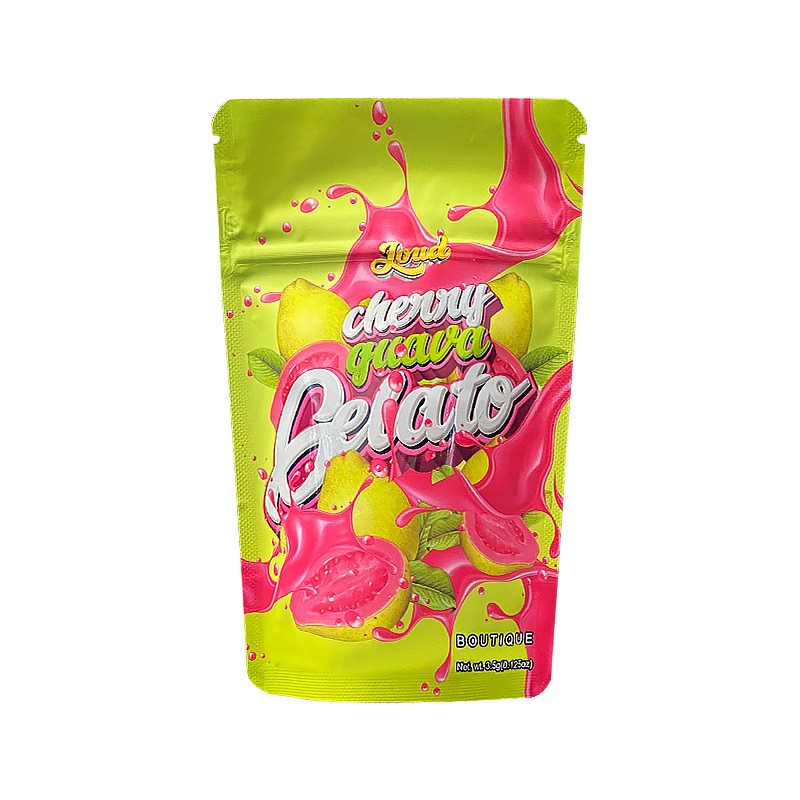
Short answer: matte, gloss and holographic finishes change more than shelf appearance. They affect glare, small-text readability, the visibility of fingerprints and scuffs, color expectations, barcode planning and how the pouch photographs. They do not, by themselves, prove barrier performance or child resistance.
The artwork team often chooses a finish from a polished mockup. Matte feels quiet and premium. Gloss looks saturated. Holographic catches attention. Then the physical sample arrives under warehouse lights, and the team discovers that the small silver text disappears whenever the pouch tilts.
Compare the finish by the job it must do
| Finish | Useful qualities to evaluate | Common approval risk |
|---|---|---|
| Matte | Reduced glare, softer appearance, restrained color | Dark colors can show rubbing or handling marks differently from the proof |
| Gloss | Strong color and a reflective surface | Glare can make small text or photography harder to judge |
| Holographic | Changing reflective pattern and high visual movement | Fine text, barcodes and brand colors can compete with the background |
These are design observations, not fixed material-performance claims. A matte pouch and a gloss pouch may use different structures—or the same base structure with a different surface treatment. Ask for the full specification if barrier performance matters.
Readability comes before the mood board
Print mandatory or safety information at actual size. View the sample under bright retail lighting, softer indoor lighting and the angle a customer is likely to hold it. Check:
- opening instructions and arrows;
- small legal or product text;
- lot and date coding area;
- barcode background and quiet zones;
- contrast at folds, seals and gusset transitions.
A holographic background can be controlled with opaque ink or a dedicated light panel, but the printed sample—not the computer render—must confirm the result.
Approve color on the intended construction
Color changes with the substrate, white ink, coating, viewing angle and print process. If a critical brand color sits beside a metallic or holographic area, ask the printer to show how the white base and separation will be built. Record the accepted sample or measurable color target appropriate to the project.
Do not approve a rigid paper proof as though it predicts every visual effect on flexible film. Use it to check copy and layout; use a finished pouch sample to approve the real surface.
Run a handling and packing check
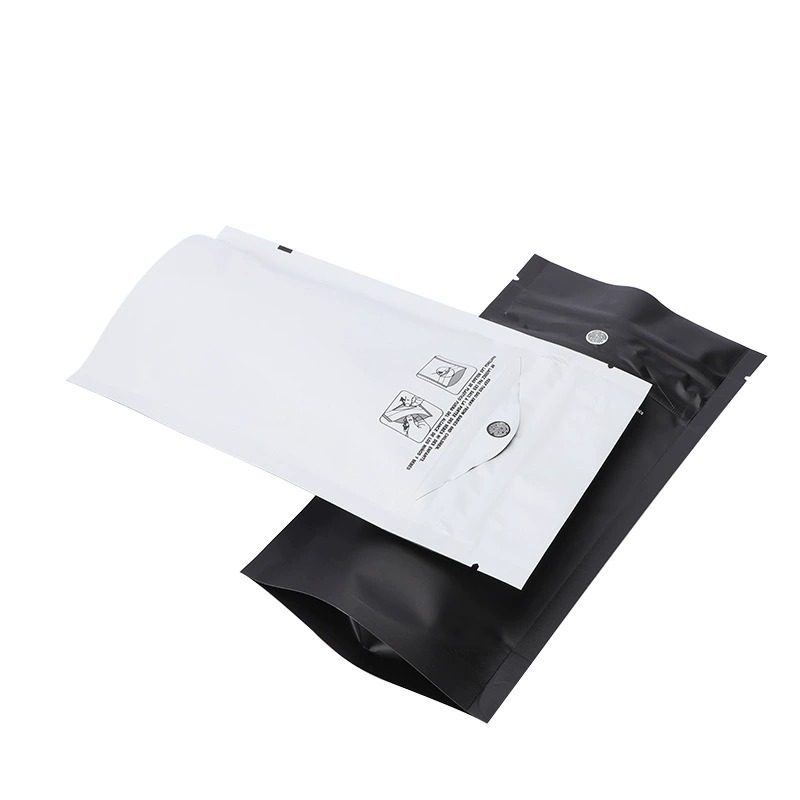
Put several printed samples through the handling they will actually receive: filling, sealing, stacking, carton packing and unpacking. Look for rubbing at high points, coating changes at folds, transferred ink, fingerprints and abrasion from adjacent items. If individual protective sleeves or separators are proposed, include their cost and waste in the comparison.
ASTM lists methods including F2252 for ink or coating adhesion and F3300 for abrasion resistance of flexible packaging films. A qualified supplier or laboratory can help select a relevant method; do not describe a casual fingernail test as certification.
Photography can change the commercial decision
A highly reflective pouch may look excellent in person but require controlled lighting to photograph. Before selecting the finish for a large product line, photograph the sample with the equipment your team normally uses. Check whether the effect is visible without hiding the label information.
For an online catalogue, consistency across the range may matter more than the most dramatic individual pouch.
Questions buyers often ask
Does matte film have better barrier performance?
Not necessarily. Finish and barrier structure are separate specification lines. Request oxygen, moisture or light-barrier information for the exact construction when it is relevant.
Is holographic material suitable for a barcode?
Do not place the symbol directly over an uncontrolled reflective pattern. Reserve a verified high-contrast area and test the finished package.
Which finish hides scratches best?
There is no universal winner. Color, coating, pattern, packing method and the type of abrasion all matter. Compare production-representative samples after handling.
Compare a holographic double-zipper pouch with a custom child-resistant pouch, then ask MyPakg for a finish and print sample appropriate to your artwork.
For a model-specific sample comparison, review printed pouch options.