MyPakg Packaging Guides · October 2026 · Practical purchasing guidance
One quotation says 4 mil. Another says 100 microns. A third says 0.20 mm. Which pouch is thicker? You cannot compare all three until you know whether each figure describes one wall or both sides together.
The units are straightforward. The measurement basis is where a purchasing conversation can go wrong.
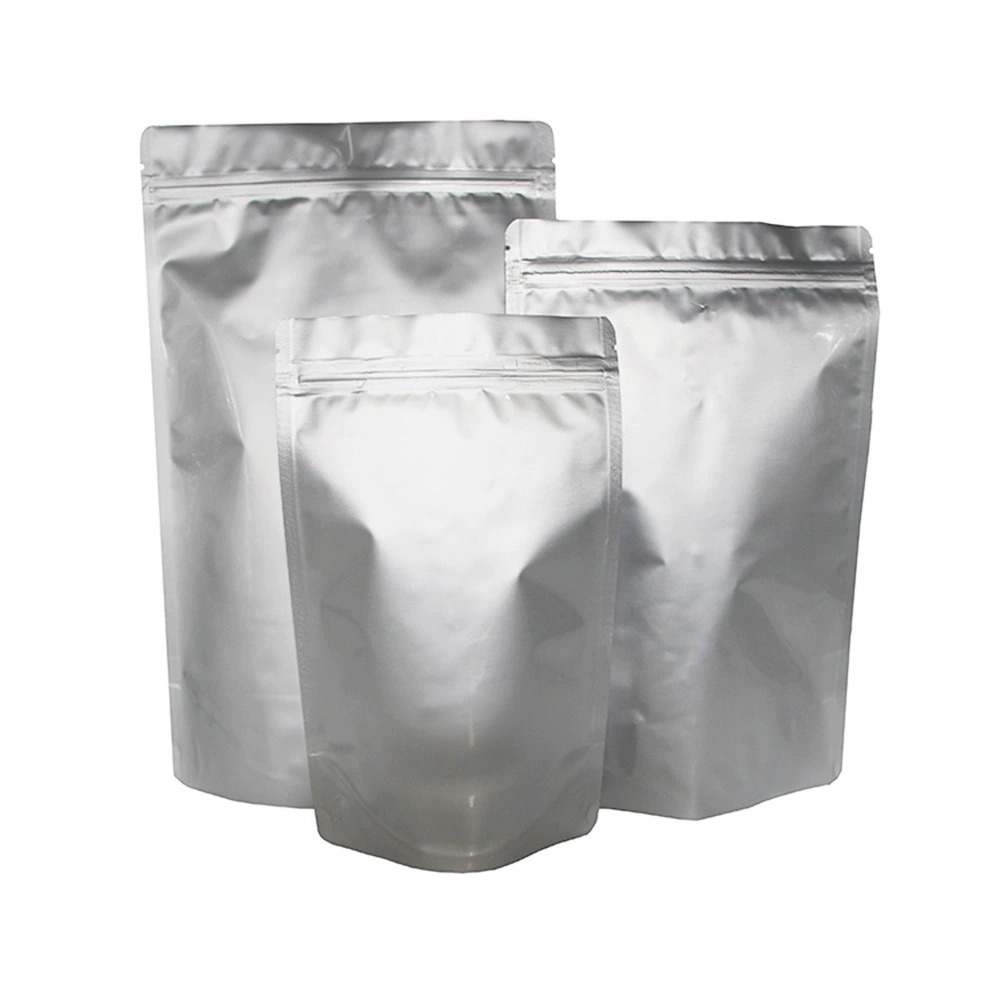
The conversion is exact
One mil is one thousandth of an inch, not one millimetre. Since an inch is exactly 25.4 mm, one mil equals 25.4 micrometres, usually written as µm or microns. The table below is a unit conversion, not a recommended specification.
| Mil | Microns (µm) | Millimetres |
|---|---|---|
| 3 | 76.2 | 0.0762 |
| 4 | 101.6 | 0.1016 |
| 5 | 127.0 | 0.1270 |
| 6 | 152.4 | 0.1524 |
Ask what was measured
For a laminate specification, request nominal total thickness per single wall and its tolerance. Separately identify the layer structure. A measurement across a flattened bag may include two walls; measuring near a seam, gusset or zipper introduces additional layers or features.
In an illustrative comparison, two uniform 100 µm walls together would total 200 µm before considering measurement effects. That does not make either wall a 200 µm film. State the basis directly on the quote-comparison sheet.
Thickness does not answer every performance question
A heavier-feeling pouch is not automatically better for the job. Ask separately about closure performance, seal behaviour, puncture concerns and the barrier properties needed for the contents. Different constructions should not be ranked only by total thickness.
For example, ASTM D3985 addresses oxygen transmission and ASTM F1249 addresses water-vapour transmission through film. Those are different measurements from thickness. ASTM D3985 and ASTM F1249 provide the method context; neither supplies a universal pass value for your product.
A specification sentence worth using
“Please quote the full material structure, nominal single-wall total thickness in µm, tolerance, and agreed measurement locations, excluding seams and closure components.” Add the proposed verification method if thickness is a contractual acceptance criterion.
Keep the approved material statement with the order. If a supplier later offers a thicker substitute, treat it as a change requiring review, not an automatic upgrade. The useful specification is the one that can be repeated on the next order.